
News
Updates from the CATCR network
2027

Call for applications: MSc in Clinical Research Leadership (1 year minimum)
The MSc in Clinical Research Leadership is a specialised postgraduate programme designed for healthcare professionals who wish to develop advanced skills in clinical research, research leadership and healthcare improvement. The programme combines academic training with practical knowledge to prepare graduates for leadership roles in clinical research and health-related settings.
Target audience:
Healthcare and health-science professionals interested in developing expertise in clinical research and taking on research leadership responsibilities.
Career opportunities
Graduates may pursue careers in clinical research, research management, healthcare organisations, academic institutions, public health programmes and other research-related settings.
- Closing dates:
- South Africa - 30/09/2026
- International - 31/08/2026
- Faculty of Health Sciences, University of Pretoria, South Africa
Admission requirements
Applicants should generally hold a relevant postgraduate qualification at NQF Level 8, such as a Postgraduate Diploma in Public Health, or an equivalent qualification in a relevant health or clinical field. International qualifications may be considered subject to equivalence requirements.
August 5, 2026
Webinar: The role of structural genetic variation in antimlarial dru resistance: the example of plasmepsin 2/3 copy number amplification
You are warmly invited to join our upcoming webinar entitled: “The role of structural genetic variation in antimalarial drug resistance: the example of plasmepsin 2/3 copy number amplification”, presented by Professor Steffen Borrmann.
- Online, August 5, 2026 1.00 - 3.00 pm (GMT+1)
- Speaker: Prof. Steffen Borrman (University of Tübingen)
How to apply
Registration is mandatory via the link beside \uD83D\uDC47\uD83D\uDD17
July 2026
Call for applications: Regional Training and Certification Programme in Biosafety and Biosecurity (Level 1)
To strengthen the capacity of African Union member states to meet national and international requirements, Africa CDC, in collaboration with ASLM and RCoEBB, is now accepting applications for its training programme from self-funded participants (private/personal funding).
This intensive 5-day course combines interactive lectures and practical exercises to enable you to become a Level 1 Expert in biosecurity and biosafety.
Target audience:
Self-funded professionals in the following fields: laboratory staff (scientists, technologists, technicians), field epidemiologists, biosecurity/biosafety officers, institutional leaders, policy-makers and government officials.
Training costs and logistics
US$2,000 — Registration fee for participants sponsored by a company, including:
• Professional training materials
• Daily meals
• Conference and training facilities
How to apply
Interested candidates must complete the application form and provide the following documents:
• Curriculum vitae (CV)
• Letter of financial support
• Qualifications
• Details of professional and laboratory experience
- 13–17 July 2026: Biological risk management
- 20–24 July 2026: Management of organic waste
- Regional Centre of Excellence for Biosafety and Biosecurity (RCoEBB), Dar es Salaam, Tanzania
Key objectives
- Risk assessment and mitigation strategies
- Emergency response planning and coordination
- International regulations, standards and bioethics
- Case studies and practical exercises
May 29, 2026
Training: Time management and work-life balance for researchers
In an increasingly demanding professional environment, striking a balance between performance and well-being has become a crucial issue. That is why, as part of our mentoring programme, a training session dedicated to time management and work-life balance is being organised for PhD and postdoctoral researchers involved in the WISE and CATCR projects.
This initiative aims to provide participants with a healthier and more productive working environment by strengthening their skills in organisation and prioritising tasks.
- Online 2.00 pm – 4.00 pm (Central African Time – CAT)
- Speaker: Ms Bel Lauretta TENE, Associate Director, Afrique RSE Congo
Key objectives
- Improve the ability to balance work and personal life
- Reduce stress caused by emergencies, deadlines and heavy workloads
- Promote everyday well-being and improve efficiency
29-30 Jan 2026
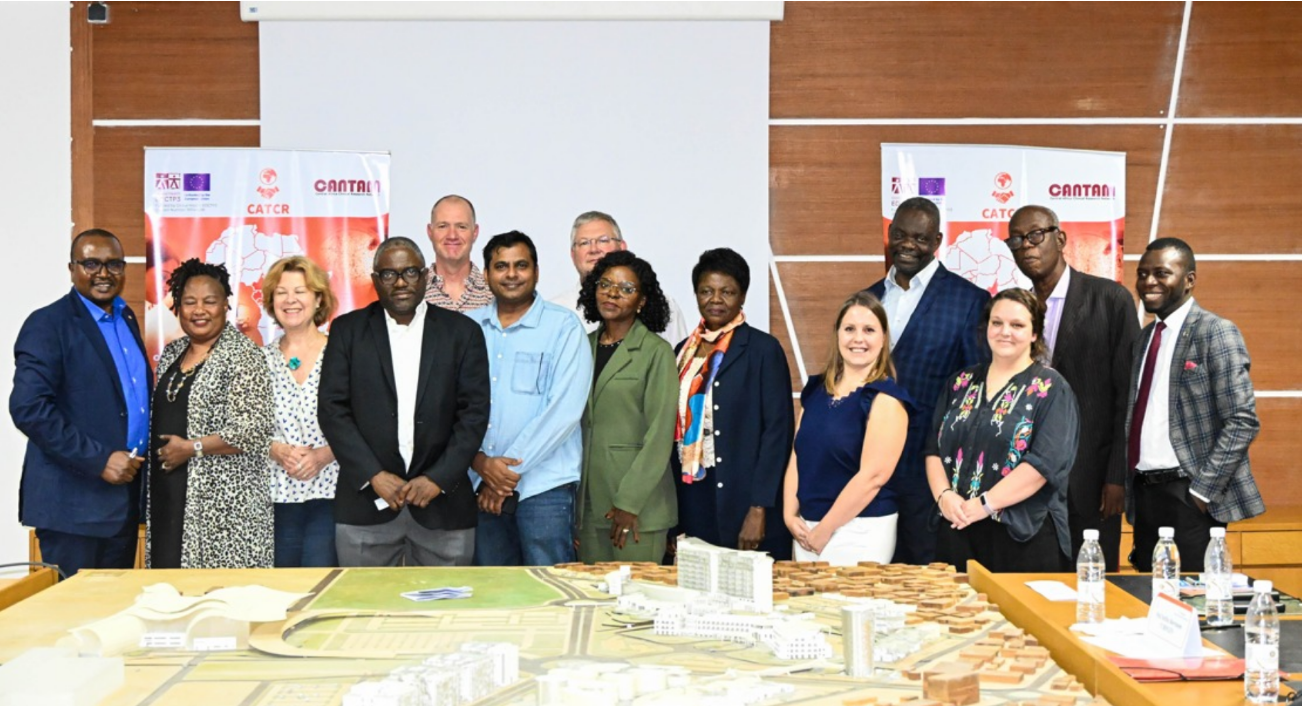
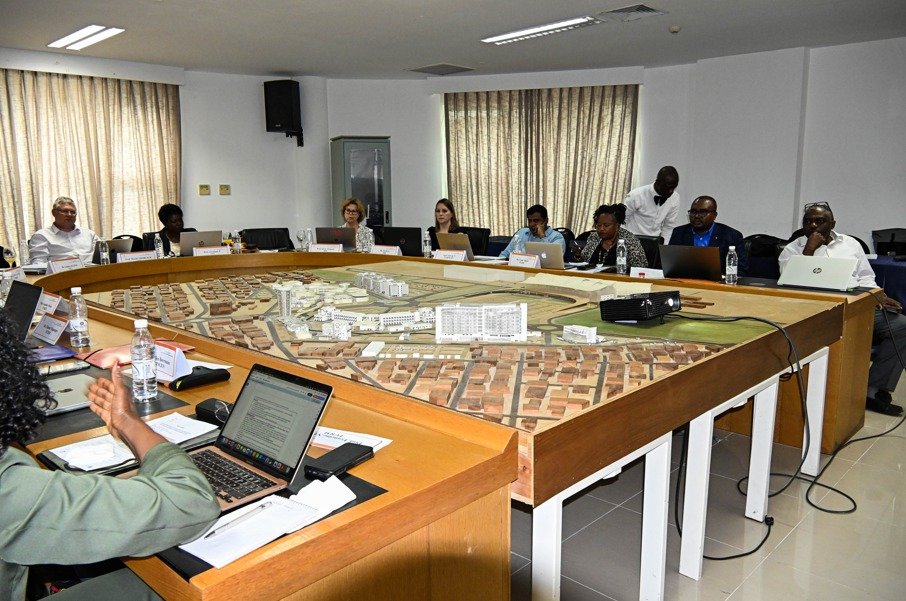
CATCR consortium Annual meeting
The meeting aimed to assess the first year of project implementation, discuss challenges and possible solutions, and define priorities for the next 12 months.
Partners from Central Africa and Europe participated, including institutions from the Republic of Congo, Gabon, the Democratic Republic of Congo, Cameroon, France, Germany, United Kingdom, and the Netherlands.
-
Brazzaville, Republic of Congo
PEFACO Hotel -
Chairpersons:
Prof. Francine Ntoumi (FCRM)
Prof. Steffen Borrmann (Tübingen university)
Key Objectives
- Capacity building
- Research implementation
- Scientific coordination
- Dissemination